


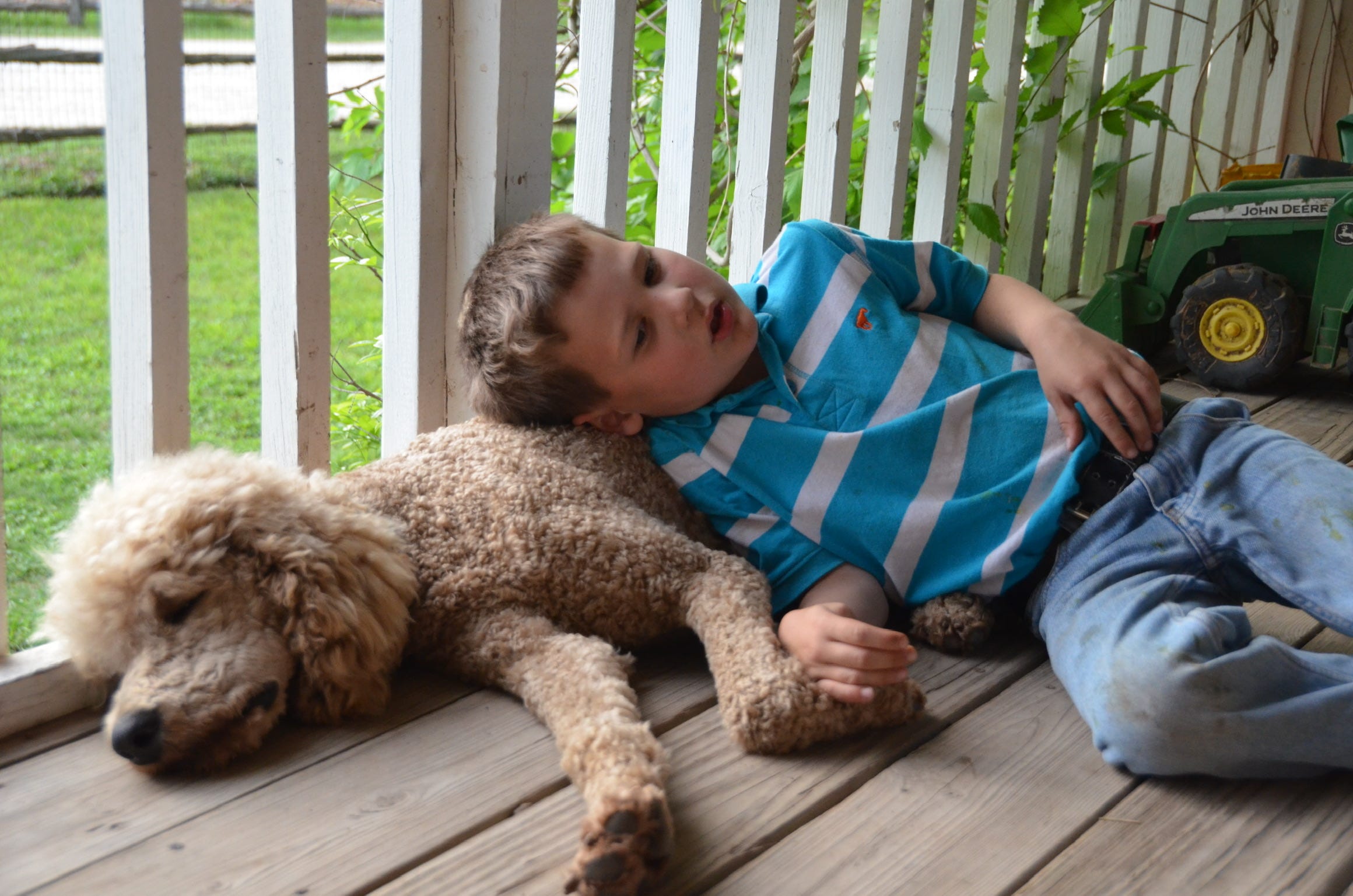
Nine-year-old Christopher frantically tugged at my skirt, clutching my hand, he shouted for the entire Walmart store to hear,
“Did I lie? Did I lie? Mommy, did I lie? I didn’t lie, Mommy, did I? Are you mad, Mommy?”
“You did not lie,” I said, leaning close to his ear and whispering. “I’m not mad, but we’ll talk about it later, in the car.”
“Why later? Why later? Did I lie? Was I bad?”
“You did not lie. We’ll talk about it in the car.”
“Are we going to the car? Will we talk about it in the car?”
His voice was high-pitched, and everyone was watching. How had I gotten myself in this predicament?
Well, it had all started from good intentions, but good intentions, I’d discover, can take some twists and turns, especially when they are connected to an autistic child.
In my journey with my son Christopher, I have read scores of books, watched documentaries, consulted with speech therapists and neuroscientists, and my mother’s heart was determined to give him the best chance—a chance to belong, a chance to succeed, and most of all, to communicate, to love, and to be loved.
At that time, there was a lot of controversy around whether an autistic person could empathize or even feel emotions, feel love, but I knew my son could. I had seen the tears roll down his cheeks while listening to a beautiful song. But there were other times when it didn’t seem like he could. He laughed at the wrong moments. When his little brother got a splinter in his finger and was screaming, he laughed. But in still other situations, he’d nearly gotten himself killed trying to save a toddler from running into the road.
The emotions were there. The heart was certainly there. It was all just a little scrambled together and chaotic.
So I ordered a stack of emotion cards, and each day we sat on the bed in my room and looked at them.
“This boy is bored,” I said, holding up a picture of a boy sprawled on the couch, arm over his head, eyes drooping. “This little girl is afraid”—high pigtails, wide eyes, tightened cheeks.
We’d look at a card, and then Christopher stood at the mirror and make the same face. I’d heard that when you actually make a face, you can feel that emotion. If you smile, you’ll be happier. As a matter of fact, I’d read a study that demonstrated how movie stars claimed that their lives deteriorated and their relationships became rocky when they played the role of an angry or miserable character—and improved when they played the role of a joyful one.
I believed that making these gestures and expressions would help Christopher to empathize, so it became a daily routine.
We took turns. I’d make the face. “Now what do you say to me when I’m making this face?”
“Are you okay?” he would imitate; his eyebrows high as he watched to see if he got it right.
Then later, around the dinner table… Steam rose from the mashed potatoes, as we all ate, and suddenly Christopher leapt up and rushed into the kitchen.
“Oh, he’s so sad,” we heard him say in his own voice—and then, in my voice, “Are you okay, Christopher?”
We knew what he was doing. He was standing in front of the stainless steel Berkey water filter, looking at his reflection and practicing the emotions.
Was it working? I wasn’t really sure, but I felt we were making progress. He was tuning in.
When I scolded our toddler, Nicolas during family devotion time and his lip popped out and he began to cry, Christopher reached over and grabbed my arm.
“Is he okay?” he said, and there was genuine concern on his face. I was excited.
The next step was dealing with moral issues.
Christopher was a little thief when it came to treats. He loved sweets. Our canister of chocolate chips was regularly mysteriously empty, and I had run out of ideas for how to hide it. I tucked it behind a jar of oats. I even put it in the pan cupboard, but somehow he always found the chocolate chips, and would even scoop sugar straight from the bin.
The crazy thing was, none of us ever saw him doing it. If we were in the room, he was good—but if we were not, he didn’t seem to be stricken by his conscience at all.
So that became my next project. I wanted him to have a sense in his heart of right and wrong.
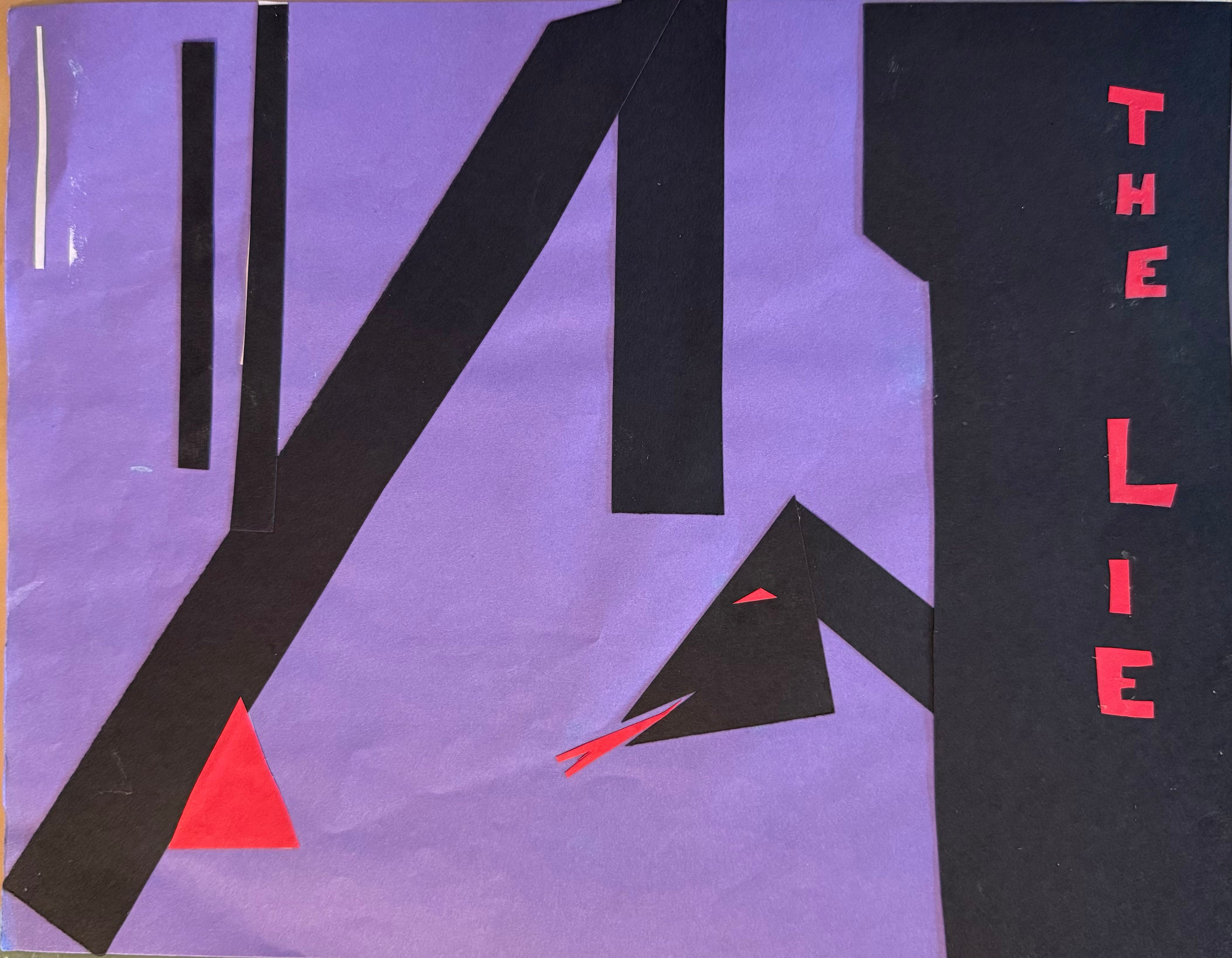
I began to read a book by Molly Bang on design—how abstract art was meant to create feelings and emotions. Certain colors came together to give peace, joy, and harmony—colors like blue, yellow and gold. Horizontal lines, soft rounded edges—these brought peace. But diagonals, black, purple, red—created tension and chaos. Heart rates went up. Breathing quickened. I had an idea.
I began to put together a scrapbook with Christopher.
“What does it mean to tell a lie?” I asked him. “What is a lie?”
“It’s a snake,” he said. My brain did a bounce. A snake, I thought. Something in it actually rang true in my heart.
“Well, maybe you’re right,” I said, thinking—the snake did have a forked tongue. And the first lie was told by a snake. God had ulterior motives, and we could be as gods. So we built a picture.
The smell of Elmer’s glue wafted up as Christopher and I cut out shapes—black, red, purple. The colors didn’t go together. The shapes were tense. A triangular snake head peeking out behind a falling-down forest. A forked tongue. Black trees. Purple background. A red snake. It gave me the creeps.
“This is a lie,” I said.
Then I gave him examples. “If you eat sugar and Mommy comes and asks you, ‘Did you eat sugar?’ and you say, ‘No,’ that’s a lie.”
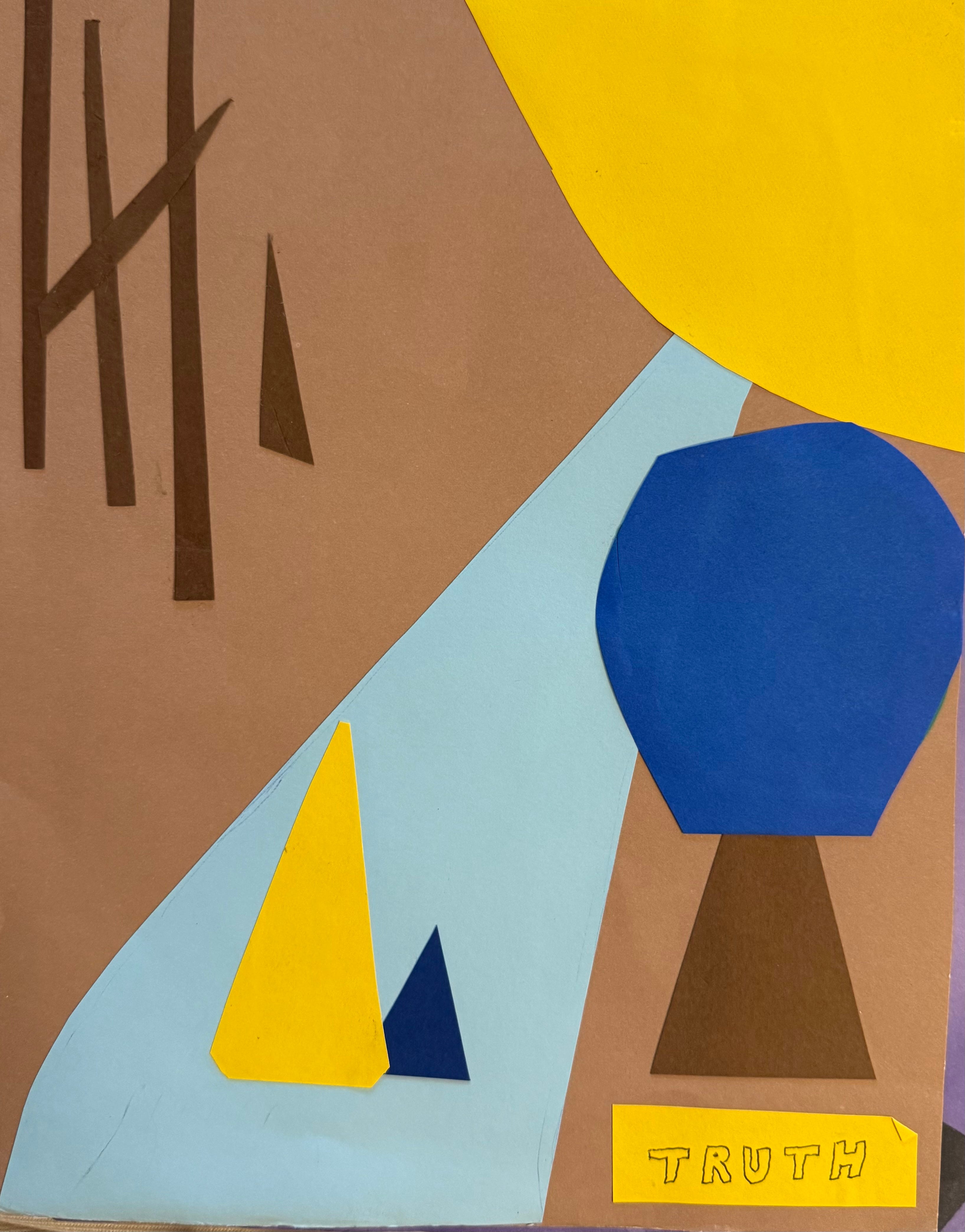
“Now here’s the truth,” I said.
We made another picture. A beautiful cream-colored pathway under a golden sun in a blue sky. Two figures walking side by side.
“When you tell the truth, you’re in the light. The sun is shining. Jesus is with you.”
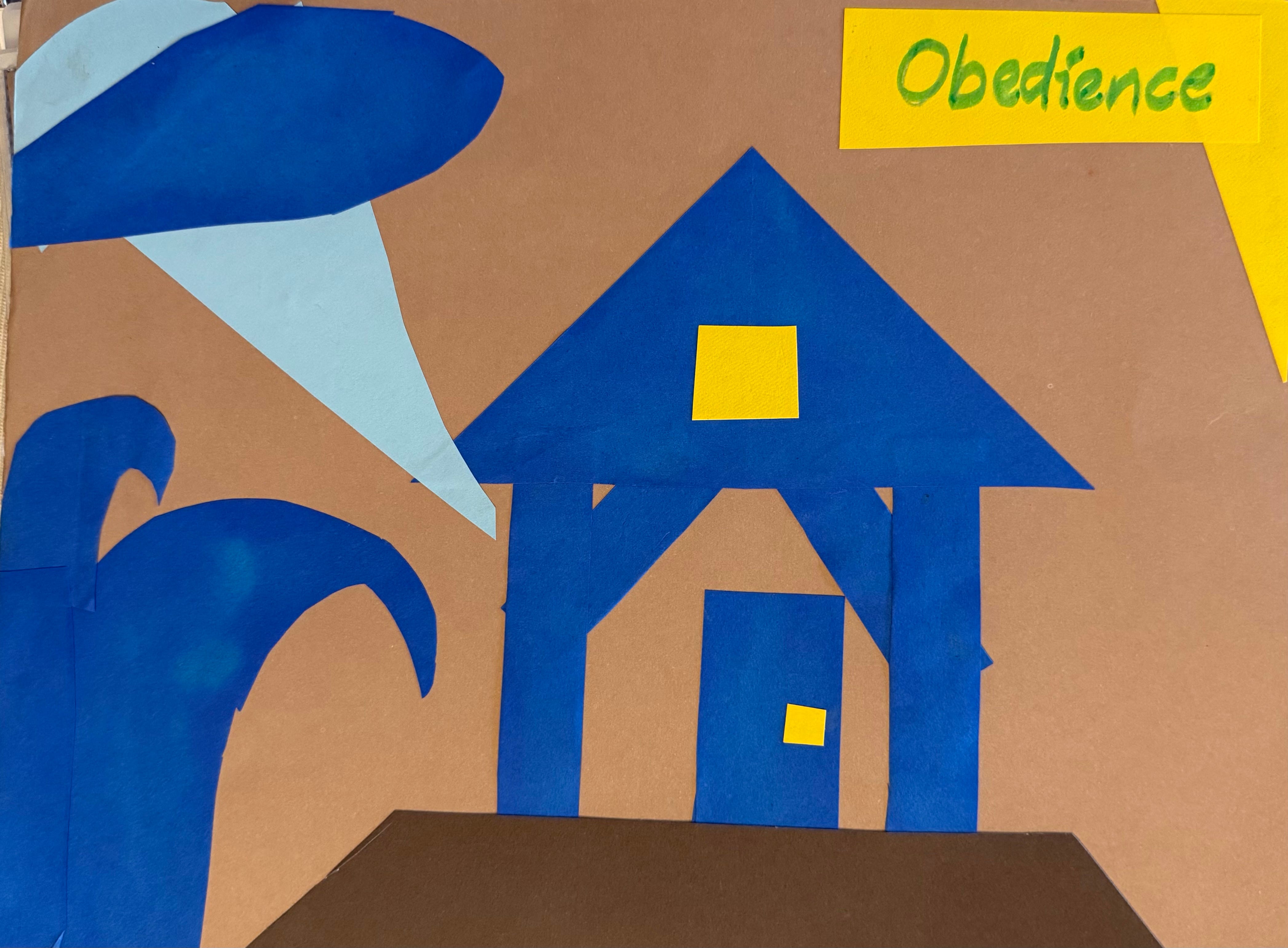
We memorized scriptures to go with each trait—honesty, lying, obedience, disobedience.
I asked him, “What does it mean to disobey?” He instantly quoted a scripture, and my mouth dropped open.
“Whoever hears these words of mine and obeys them is like a wise man that builds his house on the rock…” he said.
So we cut out a picture of a house on a rock. The colors were peaceful. Then we cut out another picture of a house on sand, and a tornado was tearing it up. The colors were chaotic and the shapes disorganized. But Christopher was getting it!
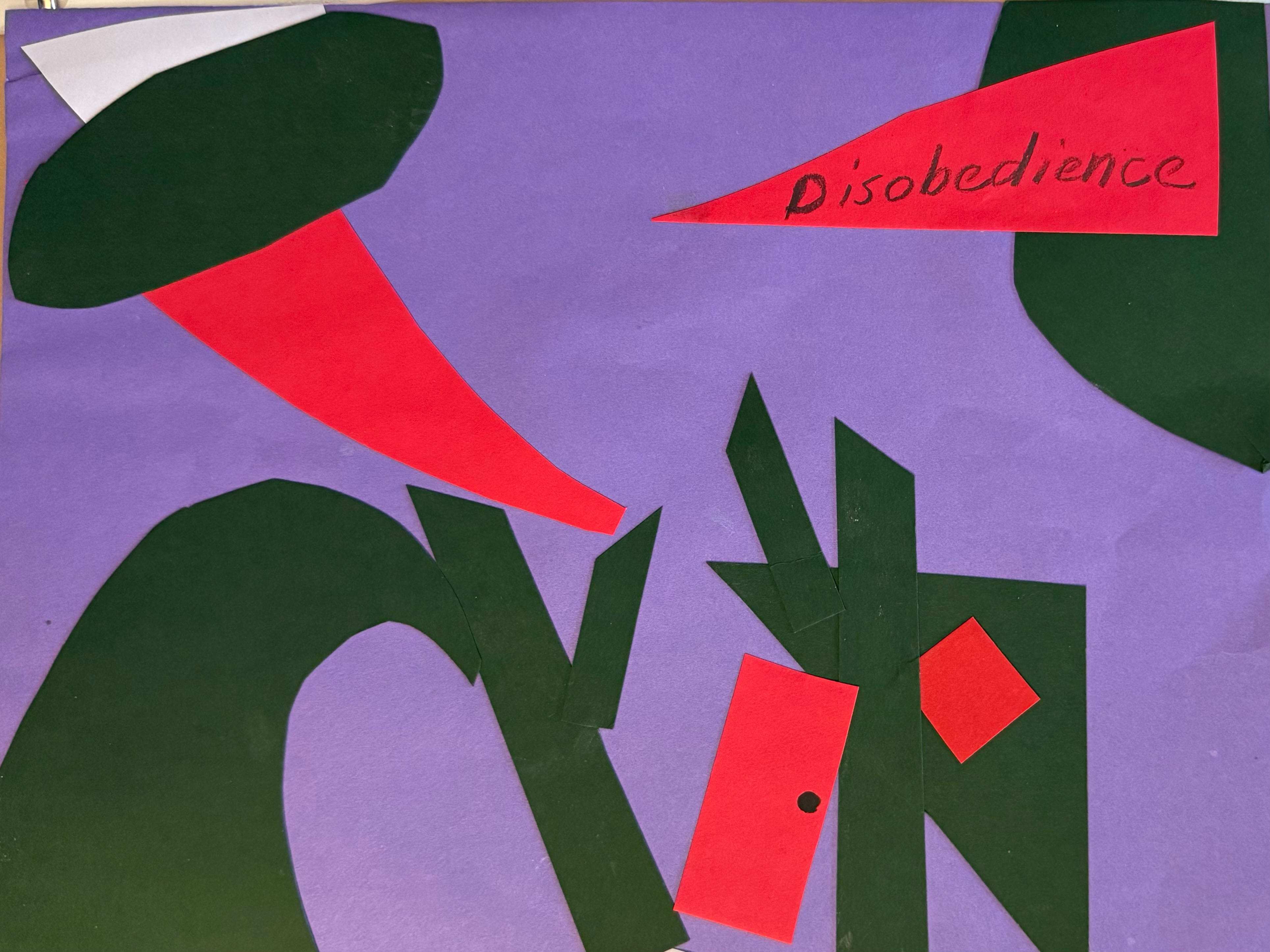
The amazing thing was, he could now look at people’s faces and tell me, “He’s telling a lie”—even about his own sibling, and he was right. We had a truth detector right in our own home.
I could feel hope rising like our river after a storm. Christopher was going to be a man of character someday. And Christopher always told the truth. He could also quote scriptures to stand behind those truths.
But it had some drawbacks.
It happened on a Monday. Normally the kids visited Grandma on Mondays, and I took that opportunity to run errands and clean house. But on this particular Monday, Grandma wasn’t available, so I decided to take Christopher with me to the store. After all, it was good for him to get exposure to stores periodically. We already had his service dog, so we were a bit of a spectacle anyway, but this would be good for the dog, too. Right…?
All seemed to be going well. People admired his dog. He was behaving nicely—until we came to the checkout line.
In front of us was a young man in a wheelchair. I wasn’t overly concerned. Christopher had a beautiful sympathy toward people with handicaps. But this young man—I don’t know why he was in a wheelchair, but his body was at least three times as wide as the wheelchair, spilling out over the tires and overlapping the armrests. He had definitely outgrown the wheelchair a long time prior.
Christopher suddenly said at the top of his lungs, “That is a very fat man!”
“Christopher,” I exclaimed in a loud whisper, “shh!”
“Why are you shushing me?” he said. “Did I lie?”
I didn’t want to say, “No, you didn’t lie,” in front of the man, so I just said, “Don’t say that.”
“Shouldn’t I speak the truth? Don’t I tell the truth?” he shouted back.
I whispered in his ear, “We’ll talk about it later.”
“Why do we talk about it later?”
And on and on he questioned me, becoming more and more frantic until he was leaping up and down beside his dog. The dog circled him, whining, then pushed his head against him to try to calm him down.
I hastily heaped items onto the conveyor belt and then shoved them into bags behind the cashier.
For once, I was very glad to have the dog and hoped everyone would consider his handicap enormously debilitating.
At last, we managed to get out the door. A mist was falling. We rushed to the car—the whole way, Christopher tugged at my arm.
“Did I lie? Did I lie, Mommy?”
At last, we settled into the car. I buckled him in, climbed into the front seat, and leaned my forehead against the steering wheel.
“Oh, my Lord,” I breathed.
Christopher bounced franticly in his seat, his voice high-pitched. “What’s wrong? What’s wrong? Did I lie?”
“You did not lie,” I said.
“I told the truth. I was a good boy.”
Now how do I explain that?
And then my shoulders began to shake.
I laughed and laughed until the tears rolled down my cheeks. Before long, Christopher was watching me in the rearview mirror—laughing along with me. So what kind of page do I make for this—chaotic colors or peaceful colors?
Such a great story! Made my morning!
This captured my heart. Christopher is a treasure!