


Dearest Daughters,
Today I will finish the story I began last week regarding our evacuation from Israel during this crisis.
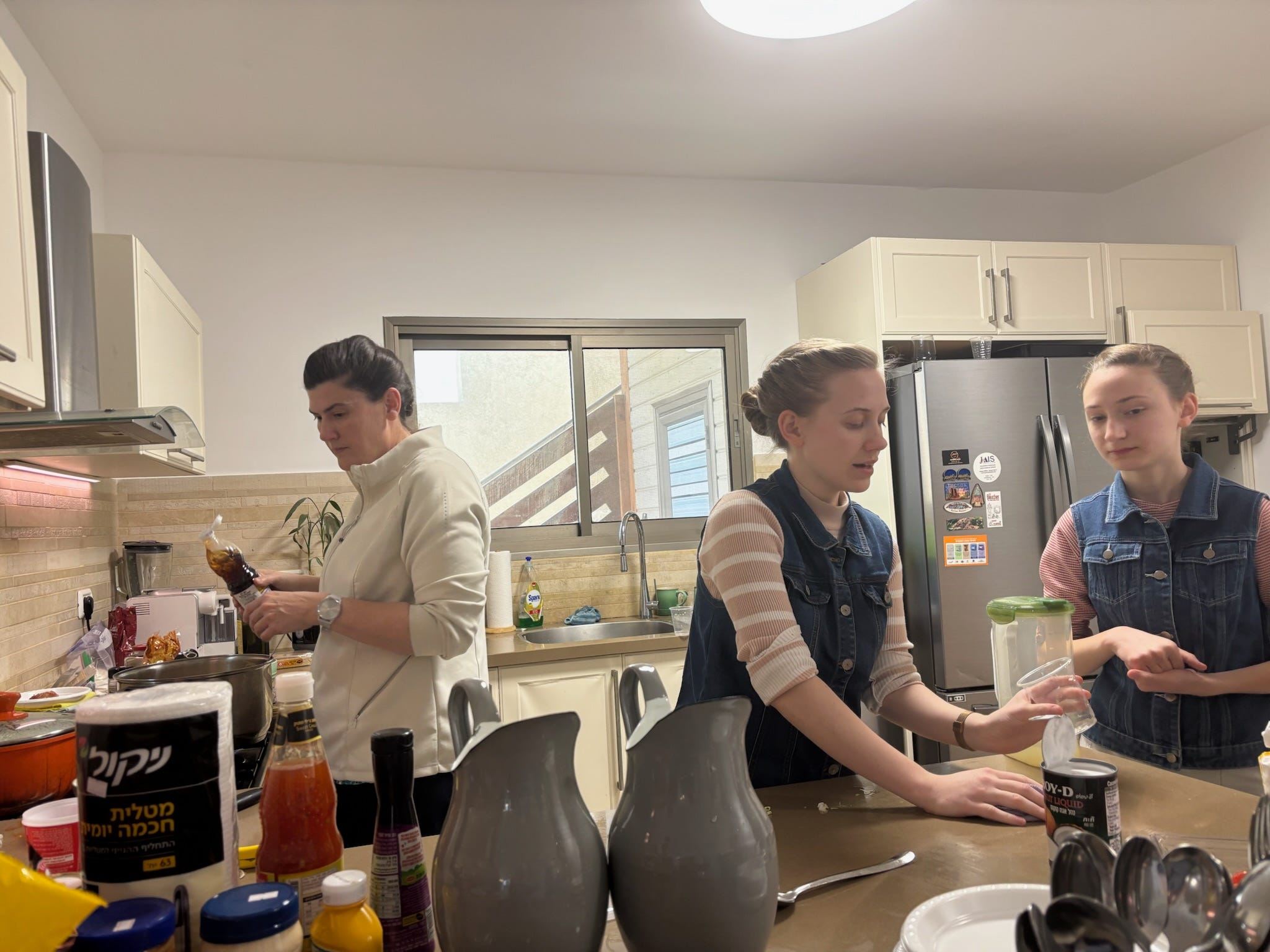
The curry was almost finished when the siren began to scream.
I was standing at the stove adding the last garnishes to a Thai curry for the families we were staying with and the neighbors when the alarm went off.
We all dash into the safe room, the heavy door closing behind us. And suddenly I realize:
“Did we turn the burner off?”
“Yes, yes, I got it,” Ahavah says quickly.
But I can’t help picturing smoke rising from the kitchen.
When people tell you of war, no one tells you about reading the Psalms huddled together in a small room full of sweaty feet and morning breath—and yet somehow breathing in fresh air through words spoken thousands of years ago that feel new every morning.
The media tells you a lot about war-ridden countries. They gather like vultures on every gory scene, but it doesn’t give you a very accurate portrayal. On the one hand, it over-dramatizes, but on the other, it leaves out the constant painful realities that relate to everyone. You are left with the impression that every village is burning, that everyone is running and screaming, wounded and desperate. The most dramatic scenes are always chosen. But I found that the most moving, the most painful, and the most touching moments were not the dramatic ones. They were the small and mundane ones. The ordinary corners of life that are suddenly overturned by war.
No one tells you about your neighbor trying to drive to your house with a meal—hoping to bring comfort and food—when the sirens go off. They debate whether to go or stay. After all, a car is a kind of time bomb; a full tank of gasoline is explosive. So they stuff the food into the car and run back into the house to wait. The all-clear sounds. They and their children run back out, start the car, and the siren goes off again.
Back into the house.
Then out again.
Then back again.
Until finally they get onto the road, only to have another siren send them pulling into a roadside shelter. But they still show up. They arrive with ice chests full of half-prepared food and sheepishly ask to use your kitchen.
“Sorry for the inconvenience,” they say, “but we figured we’d better get over here during the lull.”
No one tells you about the unity that comes, but that is the part that got to me the most.
No one knows just how they and the ones they love will show up in the hour of trouble, but everyone will be measured and asked to stretch.
I’ve had a curiosity about wars since I was a child, as long as I can remember. When I was eleven years old I read The Hiding Place. I read it twenty-seven times before I left home. I wanted to be like those people—thinking of others, giving them shelter, becoming a hiding place.
After that I read many more books about people who lived through war, especially World War II. I wondered what the war itself brought out in them. How did they behave before that? Who did they become in that season?
Last week I stood on the fringe of those experiences and felt measured—measured by God, measured by my circumstances, and measured by the kindness I saw in others. And I found myself looking for a growth spurt.

I already told you in my last letter how it began, but let me tell you how the trip to the wedding in Israel ended for us—though sadly it is still ongoing for many in the Middle East.
As a midwife, I needed to get home. I could send mothers to the hospital if necessary, and I had backup, but six babies were due soon, and I had told the mothers I would be there.
More than that, nearly all of our children were home. Only Carri Beth was with us. We felt a deep pull to get back. There is nothing like a crisis to make you desperate to gather your family.
All day Dad sat cross-legged on the floor outside the safe room with Jake, Granddad Jerry, Butch, and Brother Tsafrir, trying to figure out if evacuation was possible. The U.S. government offered little clarity.
The announcements went something like this:
“Americans are urged to evacuate as soon as possible.”
And two lines later:
“Americans are advised to shelter in place.”
“What are they trying to say?” I asked Dad.
So, inch by inch, he began building an evacuation plan through a tiny airport in Taba, Egypt. These flights weren’t on Kayak, so he had to search through obscure channels to find them. It seemed like a minor miracle when he suddenly found twelve open seats on a newly scheduled flight. Meanwhile we held our original non-refundable tickets home. After calling the airline and explaining the situation, they said nothing could be done. Thousands of dollars would be lost, not only for us but also for Dad’s parents and the entire Tindell family, who had already faced financial setbacks after difficulties surrounding their Mexico mission trip.
But that wasn’t the real question.
The real question was this: What was the will of God?
After working on the plan all day, Dad sought counsel from Uncle Asi and several of the brothers both in Texas and in Israel. Then he prayed through the night. We both had never felt more agitated.
In the morning, we lay in the dark talking, and I told him, “It’s not that I’m against leaving. And it’s not that I’m for it. I just want to hear God. I want to know that rush of the Spirit that says, ‘This is the way.’ If we can feel that, I can get behind it in faith.” Through all the strain, it had been hard to hear.
But this decision couldn’t be because of money.
It couldn’t only be because of safety.
It couldn’t be for the births.
It couldn’t even be because of our children.
You can give your children everything and still rob them if you’re not in the will of God.
So we prayed. The brothers gathered downstairs seeking a word from the Lord. I knelt upstairs by the bed. Then I paced the hall. Then I knelt again. Finally, in frustration, I cried out to God:
“Where are You, God? I’ve heard Your voice before. Why can’t I hear You now?”
I was waiting for a clear answer: Evacuate. Or Stay.
But instead I heard something else. Go check on Ahavah.
Ahavah was there with four of her children, including a newborn baby only a month old. Her two-year-old, five-year-old, and fifteen-year-old were still back home.
Suddenly my heart squeezed with compassion. I knew immediately that this love, this feeling, was the voice of God, so I got up and walked toward the stairs just as she was coming up them. A look of strain creased her face. I put my arm around her.
“How’re you doing, Hav?”
She burst into tears.
“Did we miss God?” she asked. “Is this happening because we missed Him?”
I knew immediately that it wasn’t true.
“No,” I said firmly. “Don’t even go there. The glory of God wants to be revealed—and we can reveal it through this.”
Something lifted from my heart.
Then she said, “You know what popped up in my Bible verse today? Joshua 1:9: “Have I not commanded you? Be strong and courageous. Do not be afraid; do not be discouraged, for the Lord your God will be with you wherever you go.”
A chill ran down my arms, and in that moment I knew we were going to evacuate.
How like God that His voice came through when I went to love my neighbor! All the people bringing us food, popcorn, and encouragement had already discovered the secret that God speaks where love is practiced.
We often think we must hear God first and then love, but the truth is the opposite. We love first, and there we find God, and He begins to speak.
Less than five minutes later Dad came upstairs.
“We’re going,” he said. “We’ve heard from God.”
He read the scriptures the brothers had received, and described the faith they’d felt. I told him what Ahavah had shared. The faith that rose in the room was palpable, and we looked at each other with wet, red-rimmed eyes. “Here we go,” Dad said with a small smile. Dragging our baggage down the stairs, we readied and gathered to pray, and at 9:30 Tuesday morning we pulled out on the beginning of an unknown, risky evacuation that would take us three days.
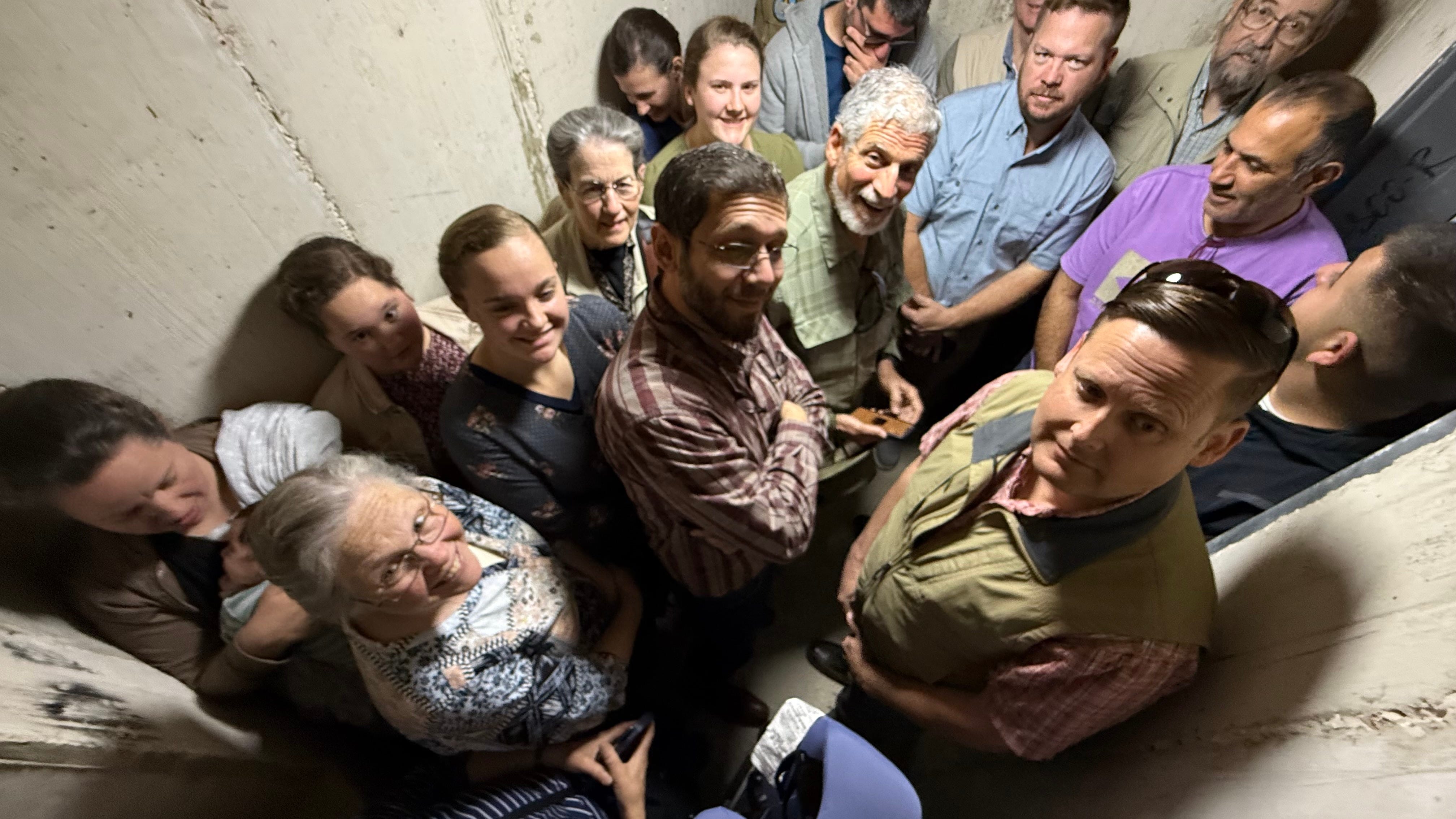
We needed to drop our rental car in Tel Aviv before driving south to Eilat. We stopped at a gas station, and as we checked the van tires for the long desert drive, the sirens went off again. We all scrambled into a concrete bunker that just happened to be right beside the air pump. Inside we were pressed shoulder to shoulder with strangers. Carri Beth, who is sixteen, began to giggle, but I could hear a hint of hysteria beneath it.
Booms echoed outside. I was straddling a stack of tiles and began to feel a cramp in my hip, so I climbed up onto them and looked down into the wall-to-wall people and took a photo.
Silence. Then someone cracked a joke. I’ve discovered that human beings have an incredible ability to lighten unbearable moments with humor. I believe it is a gift from God.
We drove through the Negev for hours. The land grew more and more austere, but magnificent—canyons dropping away from the road, cliffs and mesas rising under the desert sun. At last we came to Eilat on the Red Sea, the border of the Sinai—the place where God spoke to Moses from the mountain, and it was breathtaking.
We found a hotel to try to get a few hours of sleep before beginning our journey at four in the morning, but at 12:30 a.m. the wail of the sirens—accompanied by the shrill scream of my phone—pulled me out of sleep. My heart was already pounding with such violence that I could taste the adrenaline on my tongue. I sat upright and threw the covers aside. Another air raid, just as we had fallen asleep.
We hurried down the hall, down the hotel stairs and into the basement bunker with the other hotel guests, the familiar choreography already unfolding in the dim light. As we settled against the wall, waiting for the minutes to pass, I leaned close to Dad and whispered, “There ought to be a law against your heart pounding before you even wake up. It seems like you should be allowed to wake up first, and then get your heart pounding.”
Even there, in the bunker, he gave a small chuckle. And somehow that small sound, of humor, of courage, made the room feel a little less tight.
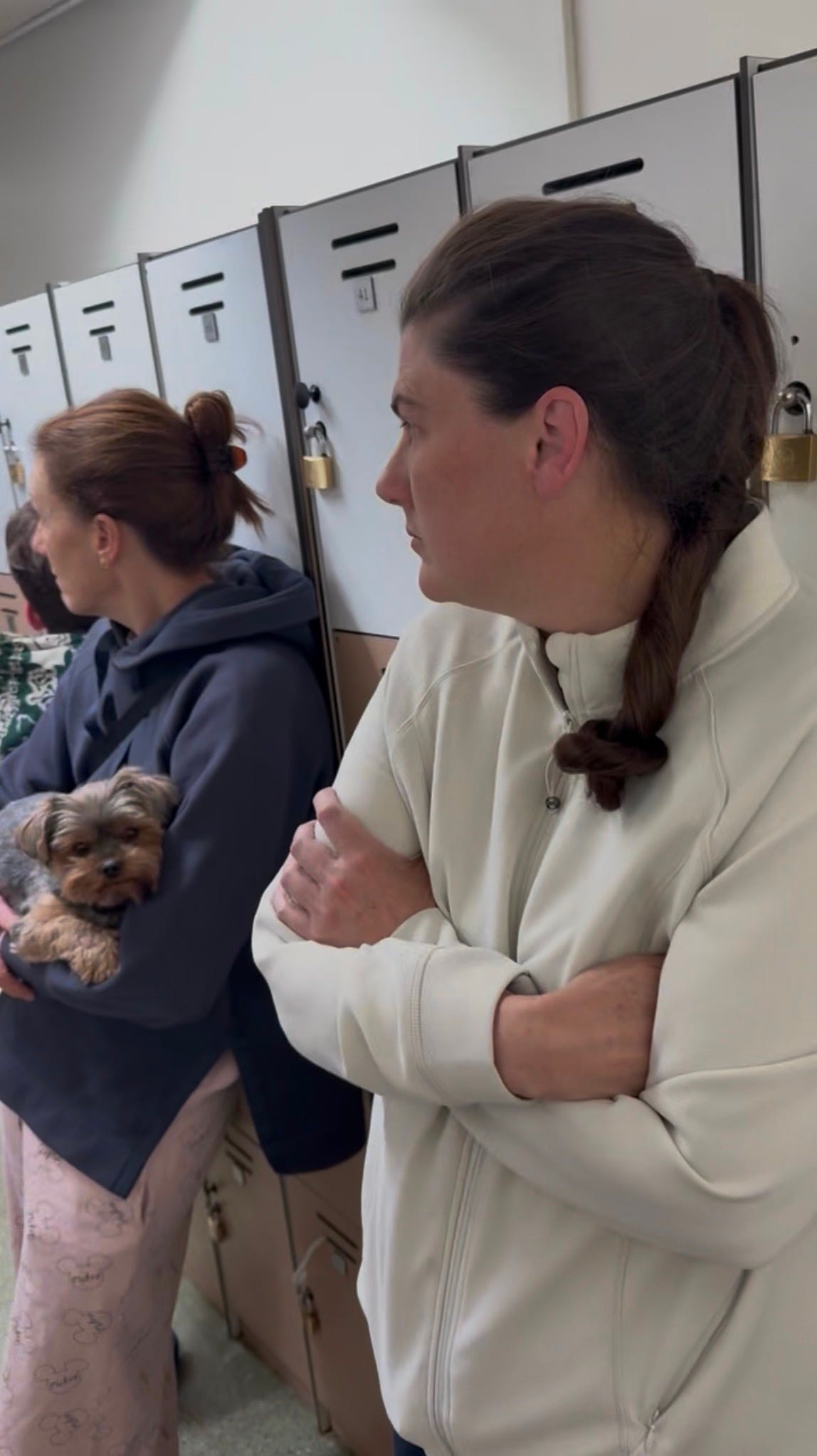
There were hundreds of people down there with children—even puppies. And I noticed something.
Normally in crowds there is a competition you feel in the air. But here it was completely absent.
No women were competing in their appearance. No one was subtly demonstrating how “together” they were as they ushered their children into the bunker. No one compared anything. We were simply all in it together.
“Here, sit here.”
“How’s your baby?”
“You can have that corner.”
People shifted to make space for the aged, for mothers with infants, for anyone who needed a little more room. And there was an incredible alertness in everyone’s eyes.
Fatigue, yes—but no distraction.
A listening.
A waiting.
A watching.
I felt it in myself. If I could listen this well forever… if I could watch this closely… who would I see? What would I hear? What might I understand?
There is no distraction in war, only a united alertness, a tuning to need and to alarm. When the all-clear sounded, we all scrambled back to our beds.
Then Dad checked his email—thank God—and noticed that our flight out of Taba had been moved an hour earlier. Instead of getting up at four, we would need to get up at three. We realized that if there hadn’t been a missile alert, he wouldn’t have seen that email in time and we might have missed our flight. So we spent the next few minutes trying to contact everyone. And that was when we realized how much more acclimated Israelis are to war than Americans. All the Americans who had been in the bomb shelter with us answered immediately. But the two Israeli families—the Ephraths and the Yardens—had already gone back to sleep.
Dad laughed and said, “It’s amazing that an Israeli can be asleep ten minutes after being in a bomb shelter!”
He eventually got through to them, and in the dark of the morning we gathered in a circle out in front of the hotel. With arms linked, we prayed for God’s shadow of His wings to cover us—for His pillar of fire to go behind us and before us. We embraced one another. Not many words were spoken; we all knew the risks, the dangers, and knew also that only God could truly see and keep us safe.
Then we set out for the border into Egypt and Sinai. When we arrived at the border, I was surprised by how many people were walking down the pothole-riddled road dragging suitcases toward Egypt at 4:00am. But what surprised me even more was how many were coming the other direction. Israelis were returning home to be with their families in a time of war. This was as far as the vehicles were allowed to go, so there under the shadow of Sinai, we embraced our Israeli brothers, said our goodbyes and set out beneath the stars for Egypt.
We passed through several Israeli checkpoints on foot, and then we entered Egypt.
At the first podium Egyptian agents wrote down our names and passport numbers by hand. Then they rubbed their fingers together and asked, “Teeps, Teeps.” So we handed over tips. This would become a repeating pattern. Thankfully, Dad had anticipated this and we had brought cash.
I lost track of how many times we stopped to have our passports inspected, our names copied down again, and our information written once more as we moved from one checkpoint to another.
Then a taxi service manager approached us, trying to sell rides to get from the border to the airport. This had been one of our biggest concerns—we had no idea how we were going to travel the twenty-five miles from the border to the airport. After some bargaining and haggling, Dad secured two vans that would take us there.
We stepped outside and I thought, Okay, this must be it.
There was a “Welcome to Egypt” sign.
But beyond it stood yet another mass of people. Another checkpoint.
Another twenty-five dollars cash per person. It was the waiting—before we even knew what we were waiting for—that was the most tense. People huddled in the dark, restless and alert, standing on tiptoes to try to see down the line.
“What are we waiting for?”
“Has anyone gone through?” These questions reverberated like a gong in all of our chests.
I told Dad, “When we’re moving I feel less tense. But when we’re standing still and I don’t know why—we’re just waiting—I don’t like it.”
At last, we passed through the gates.
Turbaned men in robes tried to sell us rides. Stray dogs panted between the legs of an emaciated camel while he ate from a dumpster. And the minaret sounded a haunting call to prayer. We were in Egypt.
We climbed into the vans. Our driver was friendly, and I took a moment to look into his eyes, searching for something human, something connected. I determined not to go with anyone in whom I couldn’t sense that.
With toot of the horn and puff of exhaust, we began the hour-long ride through the rugged Sinai wilderness.
We passed hundreds of trucks stalled in traffic jams along the mountain roads. One had overturned, spilling oranges everywhere across the asphalt.
At last we arrived at the Taba airport, standing like a lonely sentinel on the desert sand. Hundreds of people were already gathered outside the tiny building, trying to get in. We stood in the cold for an hour, stamping our feet and jumping up and down to stay warm. Pulling random garments out of my suitcase, I wrapped them around my shoulders and head.
Strangers gave Ahavah shawls and blankets for her baby. And everyone pressed toward the door, anxiously watching to see if anyone was being allowed inside, and if so, what was happening in there. When we finally entered, the airport was utter mayhem.
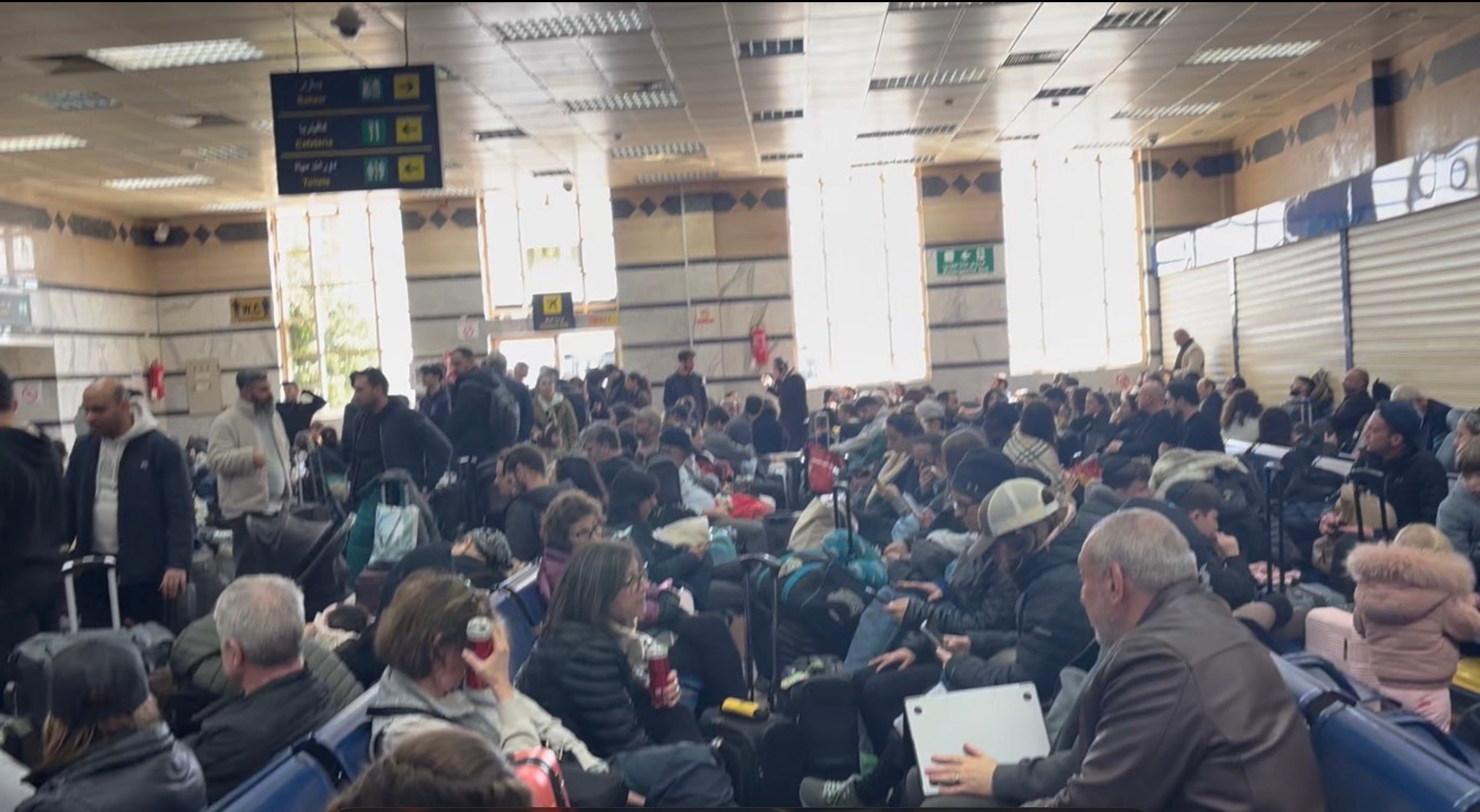
There were full-body pat-downs, x-ray scanners, crowds pressing in every direction—but no PA system. No signs. No clear communication. It was just a huge square building with individuals running through the crowd shouting:
“TUS airline!”
“BlueBird airline!”
“This way!”
“That way!”
And the crowd would shift en mass toward whichever voice we heard, trusting that whoever was shouting actually knew what they were talking about. The man behind the counter asked Dad to check our names off of a paper passenger list. All the boarding passes were handwritten. All the baggage tags were handwritten.
We moved through one inspection after another while officials carefully copied each letter of our names into their records, clearly unfamiliar with the English letters.
We were all hungry and thirsty, as there had been no food or drinks available for hours, and you couldn’t bring anything in.
At last we were gathered in the departure area when someone shouted again:
“TUS airline!”
The crowd surged toward the door, through one more passport check, and out into the desert sunlight where the jet was waiting. Climbing the stairs to the roaring jet, we finally were on board!
Inside, people tried to sit in the seats printed on their original tickets—only to find those seats already occupied.
“My seat is taken!” someone called. The flight attendant finally announced over the speaker: “Don’t panic! We have enough seats for everyone. Just sit down wherever you can, so we can count you.”
People dropped into whatever seat they could find, but a few still had no seats. I watched one lady racing up and down the center isle, her eyes wide and wet with fear. The flight attendant gave their seat to her. Then they began calling out names, asking people to raise their hands if they were on board. There was a tension in the air. The sky felt exposed with no Iron Dome in Egypt. Egypt was considered a Level Two security risk by the U.S. State Department, and the northern and middle Sinai had been upgraded to Level Four—“Do Not Travel.”
Would danger come from the sky? Would it come from a terrorist? We didn’t know. But we believed we were still in the shelter of His wings, and I felt that shelter.
The plane creaked backward, then began to roll forward, gathering speed until we lifted off into the air toward Athens.
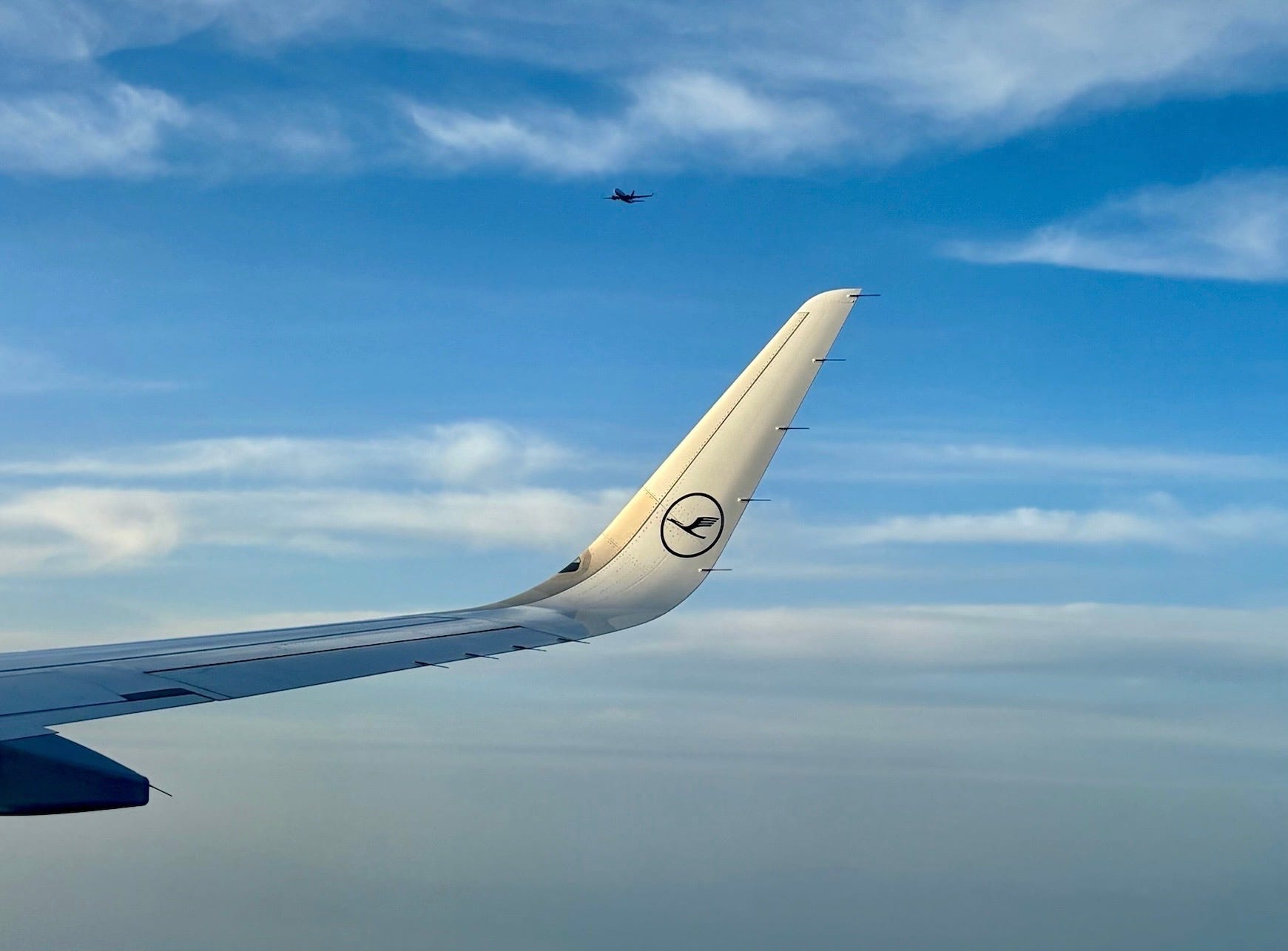
From Athens we went to Frankfurt.
From Frankfurt to Madrid.
From Madrid to home.
People ask how unity comes, how rivalry and envy cease.
Unity comes when we realize that we are all in the bunker of life together against the enemies of goodness, love, and peace.
If we became as alert to envy, selfishness, and jealousy as people are to bombs, we would find true unity.
If we learn to love our neighbor first, we will hear God.
And perhaps the real evacuation is this: leaving the enemy territory of competing selfishness and taking flight toward the land of unity and love.
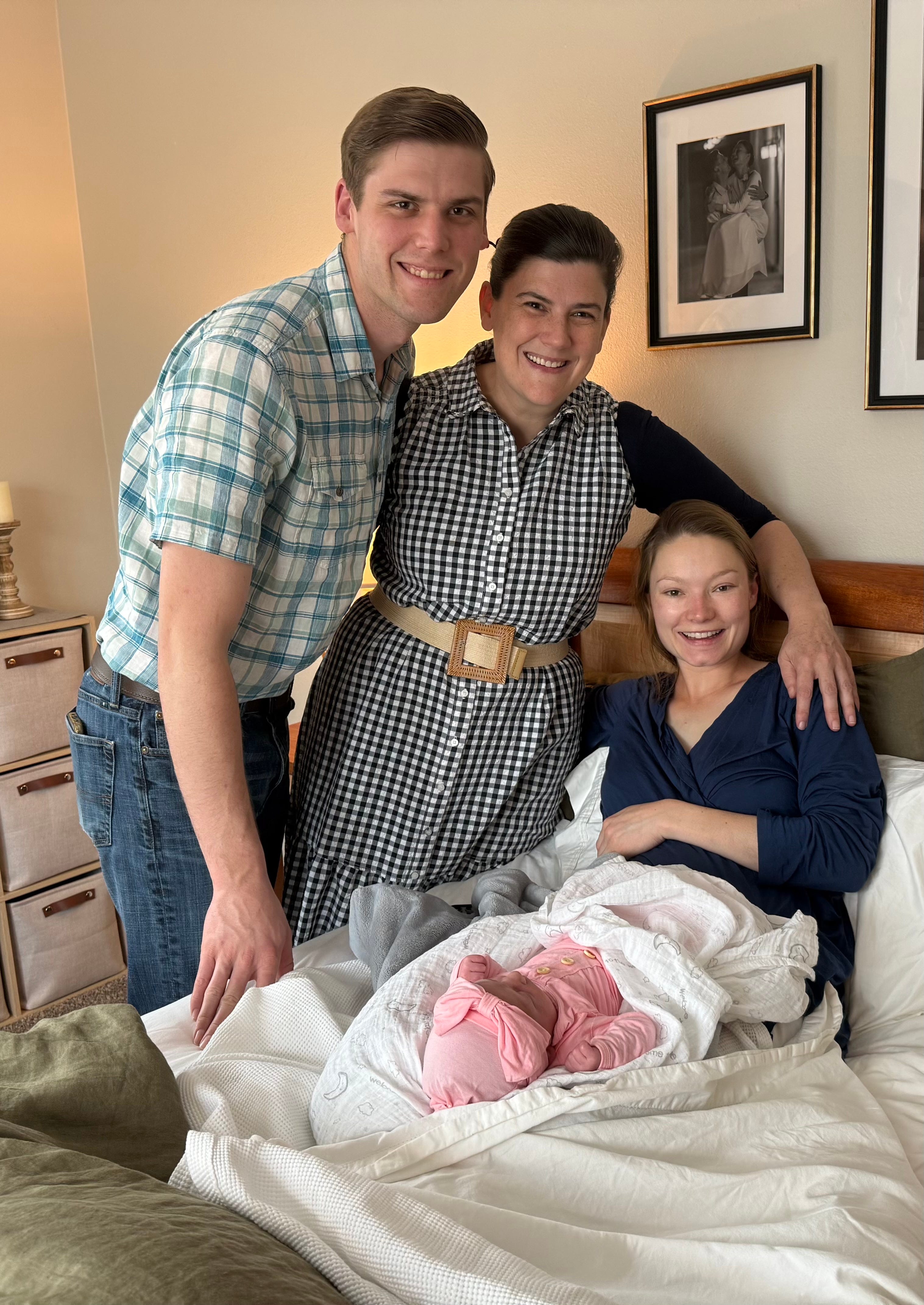
So thankful you made it home. Many prayers were answered. Thank you Lord!
Thank you Jesus!