


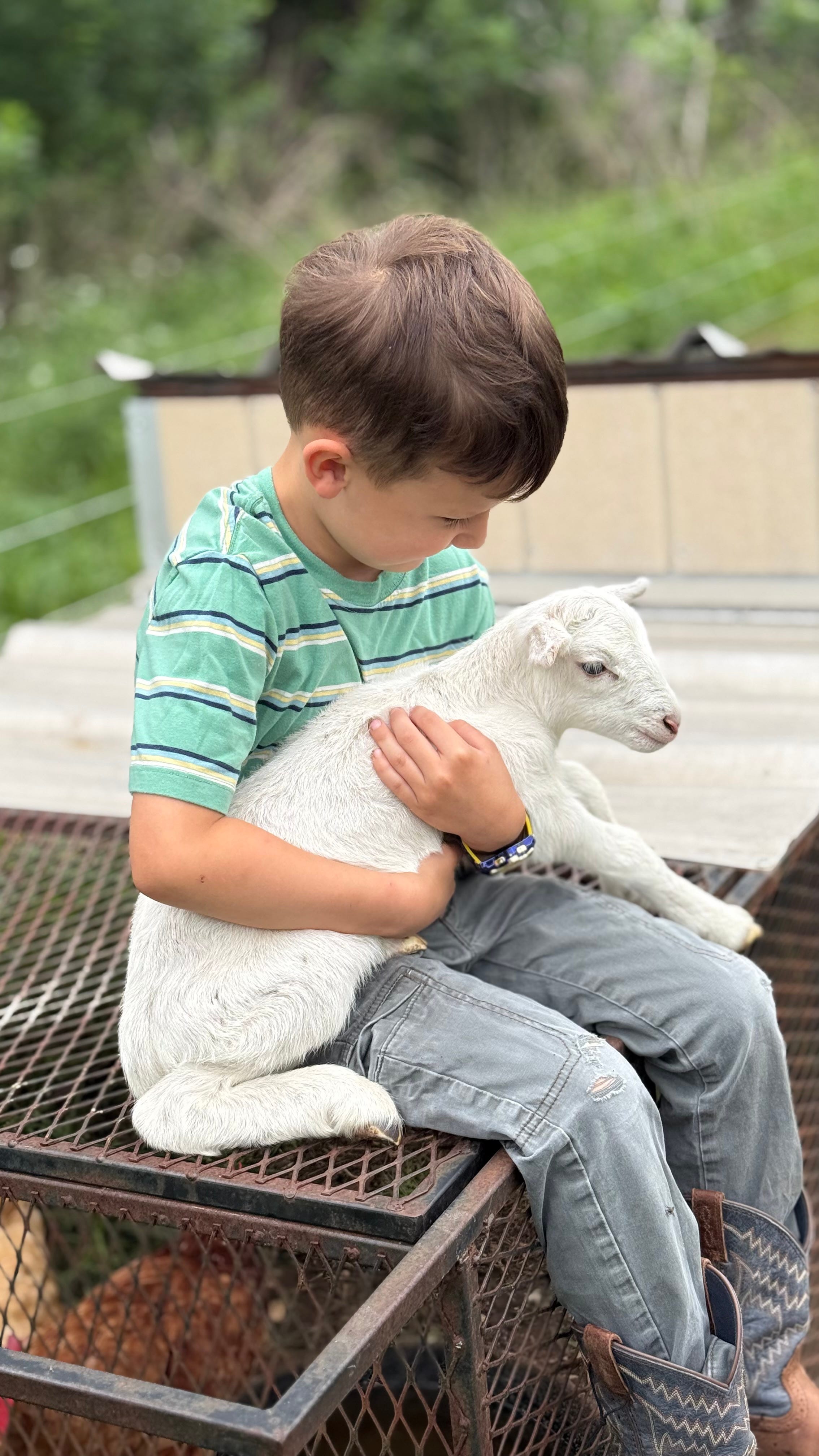
“And the Word became flesh and dwelt among us…” (John 1:14)
Dearest Daughters,
A number of years ago, I had a pivotal moment that gave me a key in learning how to relate to people in a way that is more effective and helpful.
We were trying to help a young woman who was walking through a very difficult family crisis that involved unbelievers connected to her life before she came to the Lord. She was fearful for her children and their safety, and, as is fitting for a mother, her heart was fixed almost entirely on them. Every attempt she made to bring the situation to resolution was undermined by her own fear, expressed through defensive words and actions.
After multiple counseling sessions with her and others who were helping, I found myself unsure of what to do. I felt a deep compassion for her, yet everything seemed to circle back into the same self-defeating pattern.
One night, before bed, I began to pray. I asked God to please speak something to me that might help bring light into the situation.
That night, I had a dream.
In the dream, your dad and I were speaking with others who were also trying to help this young woman, and suddenly I said, “The Lord has told me that empathy is the key and the message.” I woke with those words still resounding in my mind, and with a strong sense of the Spirit of God all around me.
As I lay there and prayed, I felt the Lord impress again on my heart: “This is exactly what I did.” And immediately, my thoughts turned to Jesus—
“And the Word became flesh and dwelt among us . . .” — (John 1:14)
Empathy is, in essence, what Jesus did. He clothed Himself in our humanity, our thoughts, our frailty, our suffering and even our capacity to die. He didn’t love us from a distance, but from within our very limitations and weaknesses. I felt the Lord showing me that I must, in some small way, do the same.
I needed to step inside this woman’s world—to feel as though her children were my own, and I was in danger of losing them. How would I think? How would I respond? What fears would grip my heart?
Over the next day or two, I practiced this. I knew I could never fully carry the weight she was shouldering, but even the attempt began to reshape my thoughts and soften my own heart towards her. It began to determine the way I perceived her, and, more importantly, how I would speak to her in our next encounter.
When we met again, I shared this same revelation with her: that if she truly wanted to move toward resolution, she would need to step into the hearts of those who were hurting her and to understand their fears, their wounds and perspectives.
This is the way of Christ.
“Let each of you look not only to his own interests, but also to the interests of others.” (Phil. 2:4)
So often, we are wounded by others, sometimes even those we love, and who love us. And when we are hurt, we naturally retreat into our own perspective. We see only our angle, our pain, and our justifications, but if we remain locked there in our narrow view, instead of somehow grasping a bigger picture, we will lose, and everyone loses.
Jesus offers us another way. His love becomes a bridge that allows us to cross over into another’s experience. In a very real sense, He takes on flesh again through us when we allow His love to move within our hearts. We begin to clothe ourselves in the fears of another, in the hurts of someone else, and from that place, we can speak God’s truth with gentleness, and then love’s power is revealed.
This is the key to understanding others. It is the key to your marriage. You are female; he is male. There are differences that will, at times, feel like barriers, but in those moments, ask God to help you step inside your husband’s thoughts. Get inside his pressures, his concerns and his burdens.
With your teenagers—ask Him again.
With your neighbors—do the same.
With those who wound you—especially ask the Lord to give you a new angle.
This is what will make you an effective vessel of love. This type of empathy makes the love of Christ visible on the earth again. His body becomes living, moving, and still reaching out through His people.
May God help us all to become expressions of His love, even in the midst of our human weakness.
With all my love,
Mom
This Substack is reader-supported. To support my work, consider becoming a free or paid subscriber.
A powerful word! Thank you for sharing!
Such a help! Thank you!