


“Trust in the LORD with all your heart; and lean not on your own understanding.
In all your ways acknowledge Him, and He shall direct your paths.”
Proverbs 3:5–6
Dearest Daughters,
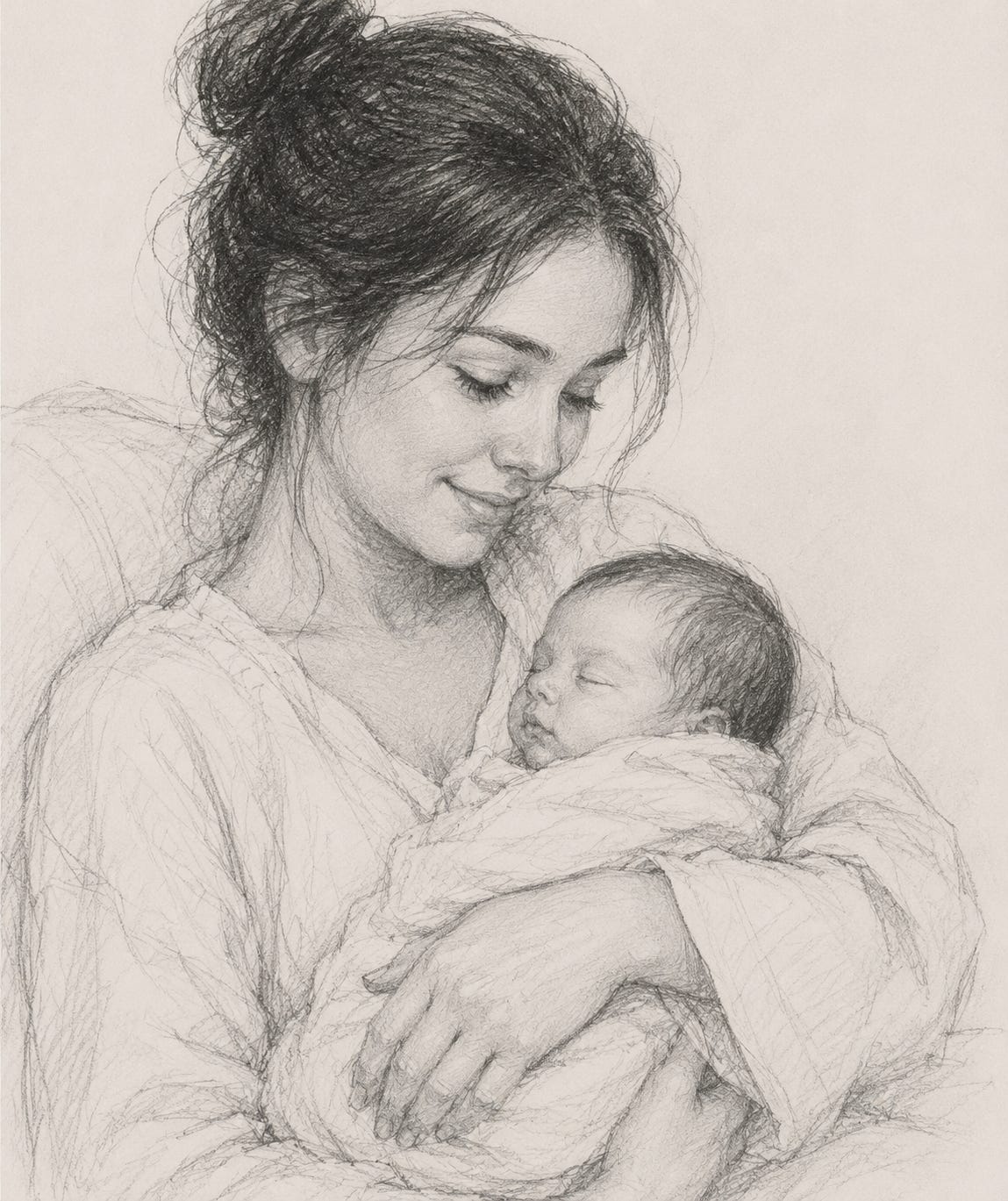
Last week we discussed the beauty of becoming a mother, the change of identity. I would like to continue along the vein of new babies and new mommies.
Everything wonderful and beautiful comes with its challenges, and babies are no different. So let’s talk about the immediate postpartum phase for a minute here. What is going on in your body, and what is going on in your baby?
Physical recovery from a birth is not something that should be taken lightly or flippantly. Now, every birth isn’t the same, and some births certainly require more time for physical recovery than others. But in all of them, even the easiest births, you need to pay attention, because more is going on than you realize.
That amazing wonder organ, the placenta, that has been present in your body for the past nine months, has just left. And this has more of a bearing on you than you might think.
The placenta is a marvel. It functions as so many organs for the baby. It takes the place of the lungs. It’s also the filter, functioning for the kidneys and the liver. It’s feeding the baby and doing the work of the digestive tract.
But what it does for you is that it produces estrogen and progesterone, two of the primary female hormones. And when that organ evacuates your body, your body literally drops off of a hormonal cliff!
This can cause anxiousness, night sweats, painful cramps, and intense mood swings. You might find yourself crying over everything and nothing.
I had a beautiful birth. I love my baby. Why am I crying? I’m so happy, yet I can’t stop crying!
Your kids come to visit, and you’re convinced that they hate you, that they have completely backslidden from every bit of training you’ve poured into them. You may look at your own body and think it’s ugly. And you’ve just metamorphosed into the local Dairy Queen! All these things may be whirling through your mind.
The feelings are real; I’ll acknowledge that. We can expect them, because the hormonal waterfall has just dried up in an instant!
However, the perspectives are not real.
So don’t take your thoughts and feelings too seriously in those first days and even weeks after a birth. This is all part of the process and probably God’s way of helping us to rest a little more.
Because on top of the hormonal crash, you’re exhausted. You’re getting up all night. You’re quite sore. Your body has just gone through an enormous physical event, and you’ve got that little baby to care for, so don’t become overwhelmed and despondent.
The Scriptures tell us that a woman will be “saved through childbearing.” I think that Scripture can mean a lot of things, but one of the things I’ve thought about is that childbearing can teach us to trust in God and in others—anything besides our own perspective—and we all need to learn to do that!
Someday we’re going to be old and feeble. We will then need even more trust for others and God. Postpartum changes can provide a meaningful step along our journey of increasing trust, teaching us to surrender in a new way. So don’t become defeated when you feel those attitudes and moods. Say to yourself, That’s my hormones talking.
Those hormonal changes can produce what some call “the baby blues”: the crying, the mood swings, anxiousness, and emotional vulnerability that are frequent in the first days after birth. But if those feelings become severe, or continue rather than beginning to dissipate, reach out for help. Some of these health struggles are difficult, and asking for help is part of learning to trust and to allowing yourself to be loved.
We can fortify ourselves during this vulnerable time by being prepared, by trusting others, and by binding satan. He loves to ride in on our weaknesses, on our hormones, on our fatigue, and we don’t have to let him.
Allow yourself to be cared for and loved by your friends and family. Accept help and embrace relationships, both in that season of postpartum recovery and ahead of time in anticipation of it.
Don’t be shy to reach out for help if you need it, to hear another perspective and another angle.
Drinking plenty of water is also vital during this period of time as your body adjusts, recovers, and, if you’re breastfeeding, begins producing milk. Plenty of rest is an absolute necessity.
Give yourself to your baby, to lying down and snuggling and just observing your beautiful new infant. Pay attention to their needs, to the changes in them. Admire them openly and speak peace into your own heart and into theirs.
And what’s going on in your baby? They’re learning to acclimate to a world outside of the womb!
They’ve gone from living surrounded by water, receiving oxygen through the placenta, to living in air and breathing with their own lungs. Their nervous system is still immature, which is why they’re constantly moving, startling, flailing their little arms, and sometimes slugging themselves in the face.
They haven’t yet learned what is day and what is night, so don’t get in a rush.
Help them make this transition as gently as possible, giving them a peaceful, dark night, soothing music to put them to sleep, your voice to bring them comfort, and breastfeeding to nourish them, comfort them, and help protect their developing immune system.
It’s really a lovely season, but everything lovely comes with a price, and it only makes it more valuable.
So don’t get caught in the mire of the challenges!
Look forward to the brand-new and beautiful relationship that is just beginning.
With all my love,
Mom
I could have really used your letter when I was having my babies......many, many years ago now. Your advice to your daughters is wise and such a helpful reminder of what is needed after giving birth.